Making user research stick when you're moving quickly
Summary
I built a research playbook that empowered my team to run high-quality user research at scale and deliver customer insights within realistic timeframes.
Client: Moat
Role: Design Director
Timeline: 2018

Moat was a digital advertising analytics and measurement company that helped advertisers and publishers assess the effectiveness of their digital campaigns. I joined the team shortly after they were acquired by Oracle.
My initial focus was improving the user experience of Moat's flagship product, Moat Analytics. The first iteration was built with limited resources and the user experience had been largely neglected, so issues were compounding.
When a couple of high-paying customers started complaining that the product was difficult to use, leadership panicked and turned to me and my growing team to find a way to improve the overall product experience.
Challenge
Moat was a digital advertising analytics and measurement company that helped advertisers and publishers assess the effectiveness of their digital campaigns. I joined the team shortly after they were acquired by Oracle.
My initial focus was improving the user experience of Moat's flagship product, Moat Analytics. The first iteration was built with limited resources and the user experience had been largely neglected, so issues were compounding.
When a couple of high-paying customers started complaining that the product was difficult to use, leadership panicked and turned to me and my growing team to find a way to improve the overall product experience.
My Approach
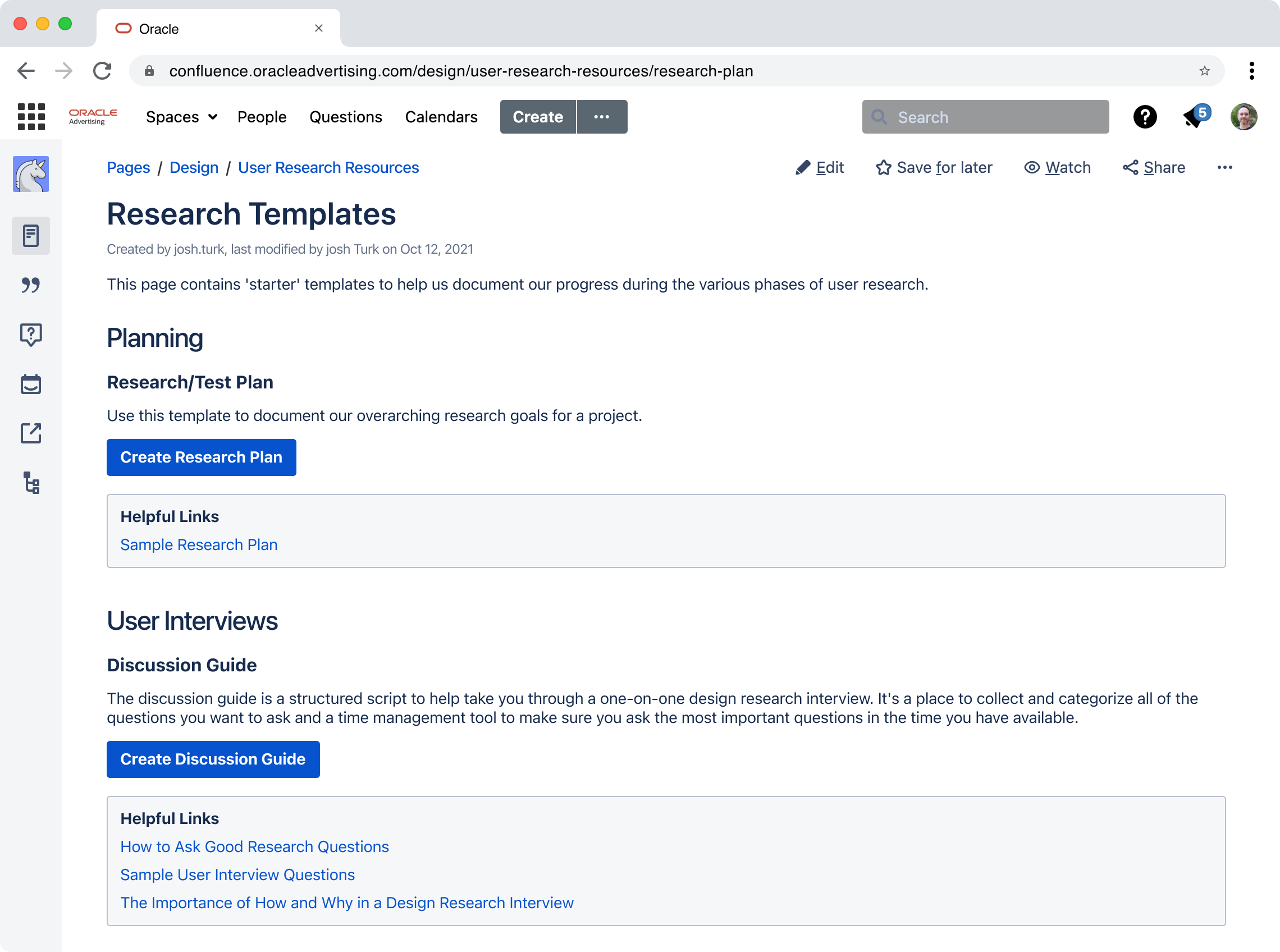
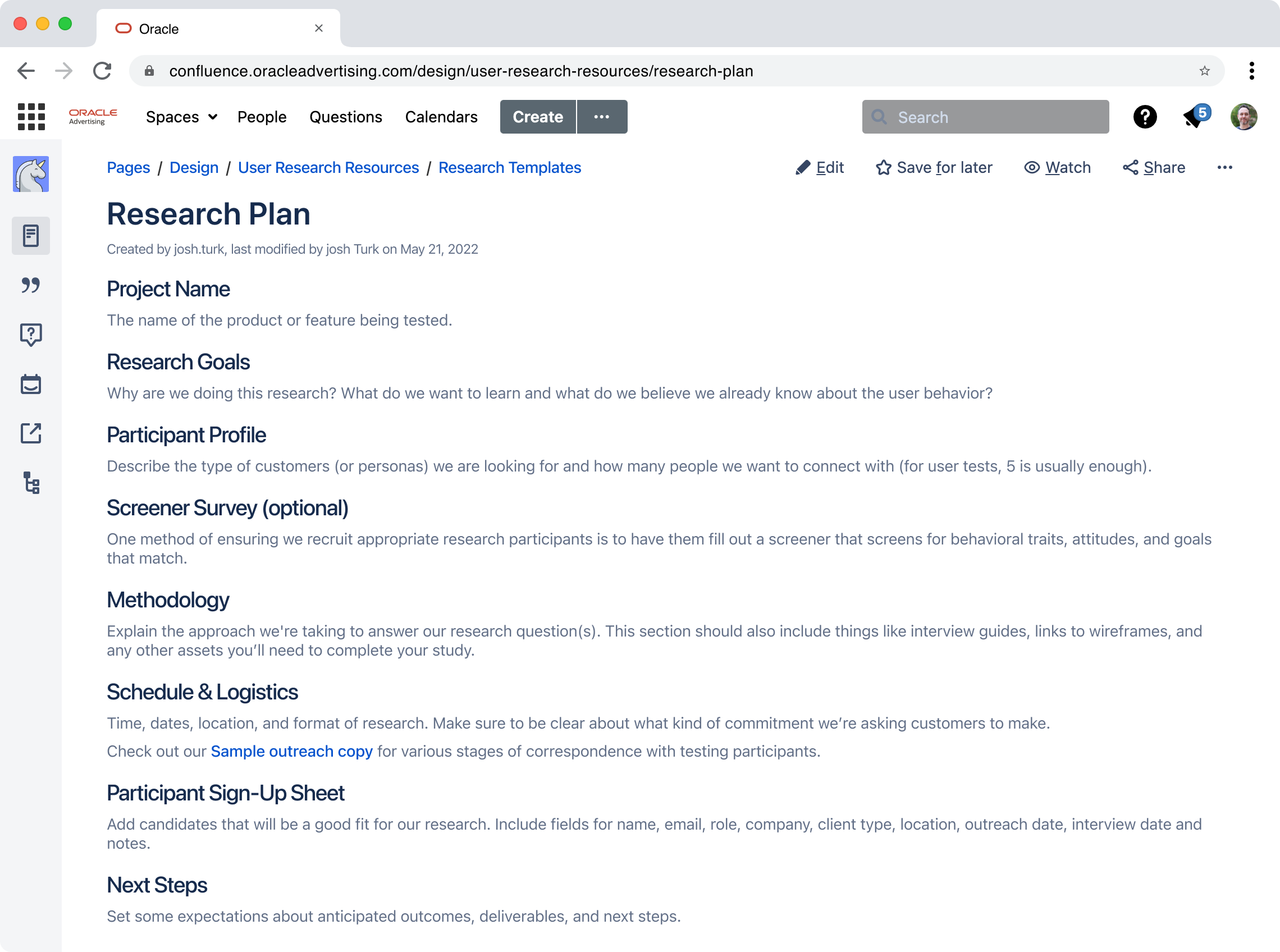
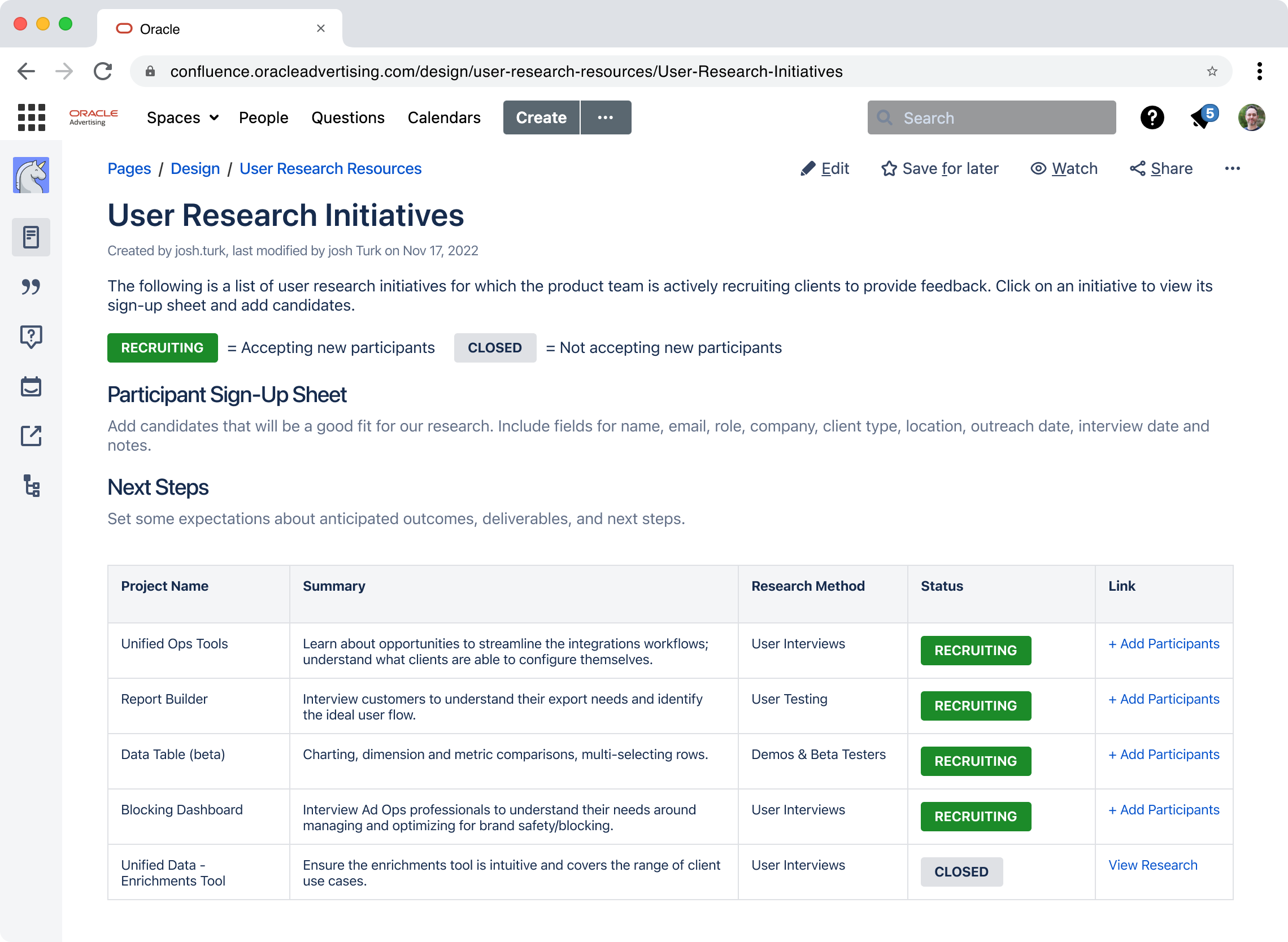
My solution was to built a research playbook: a deliberately small set of methods, each with templates, step-by-step instructions and best practices so any designer (or PM) could run and synthesize their own research without any special training. A core principle of the playbook was that even a little bit of research is better than none. It gave people explicit permission to do just enough research, then stop, making the process feel a little less daunting and time consuming.
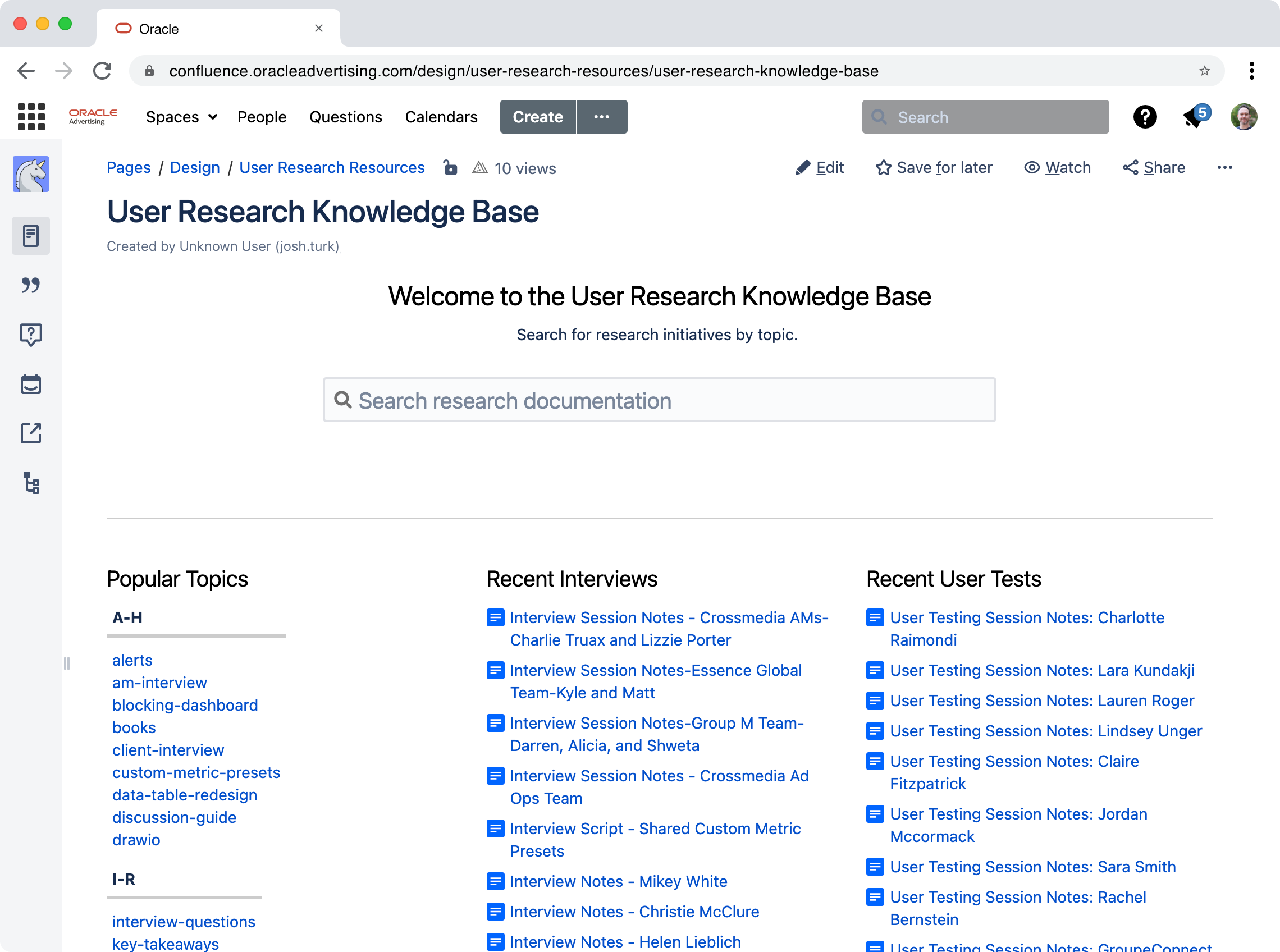
I also wanted our research tools and insights to be accessibly to everyone in the company, so we built and stored everything in Confluence, our team collaboration workspace. Documenting our research directly in Confluence allowed us to take advantage of its internal tagging, effectively turning it into a searchable insights repository.
Impact
Within a year, PMs were citing research from the repository in their PRDs unprompted and flagging where they needed more user feedback, and we kept iterating on the playbook for over three years, using it across multiple products. One of the customers who initially complained about the user experience became a valuable research partner, collaborating with us on several important products and driving real product changes and strengthening our relationship.